


This is from our Letters From The Founder publication.
Dear America Network –
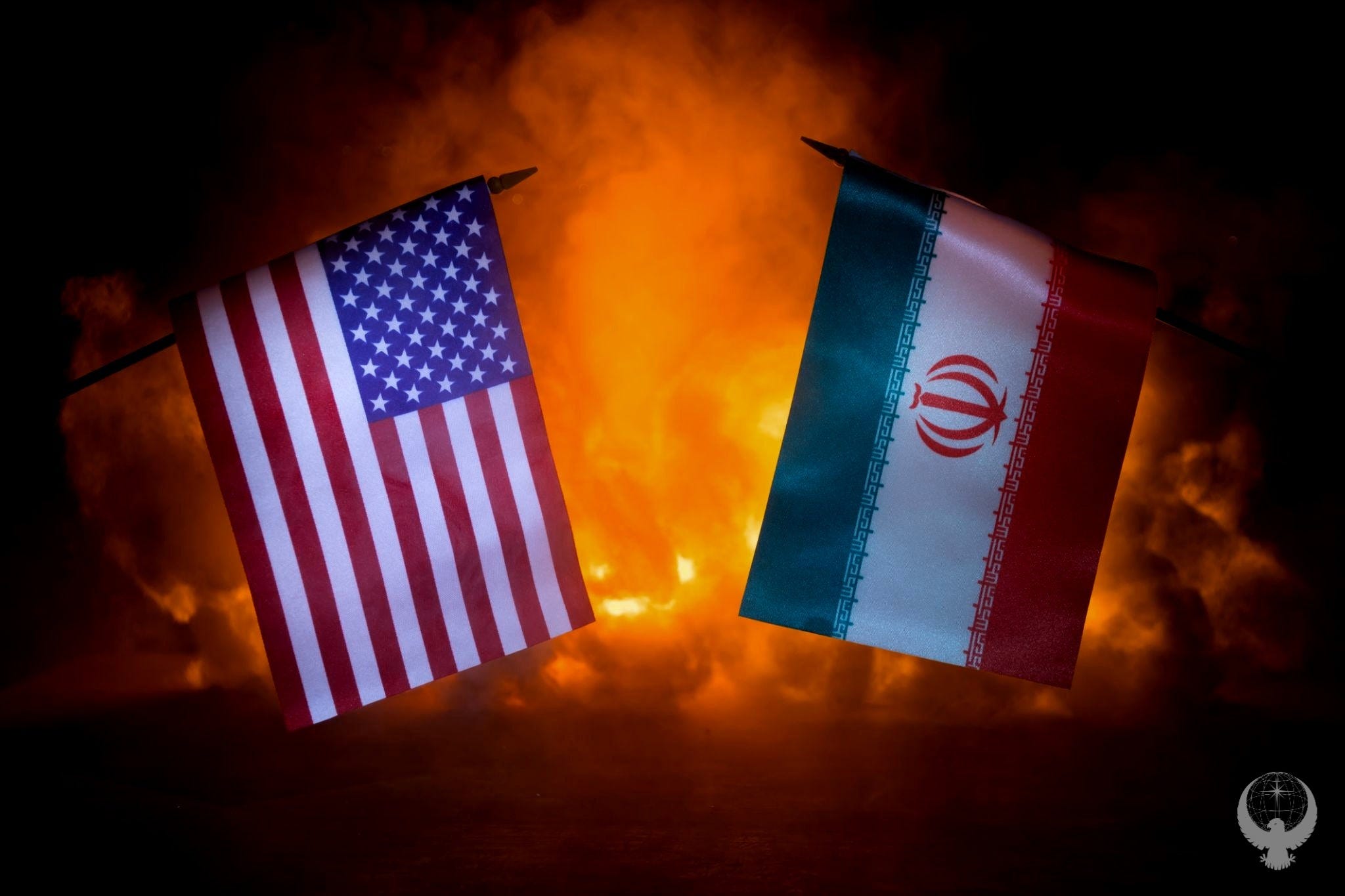
Why did the United States attack Iran? What has been gained and sacrificed by the American people as a result of these actions? What’s next? Like everything in the Middle East, it’s complicated, and we did not get to this point overnight. However, let’s discuss what is most important about this war to the American people today.
Brief U.S.-Iran background
Prior to the significant power shifts that occurred in global politics after World War II, the U.S. and Iran had limited but decent relations. However, in 1951 Iran nationalized the then British-controlled oil industry. In response, in 1953 the U.S. and U.K. backed a coup to oust the semi-democratically elected leader at the time and put in place a new leader. The Shah, as he was known, was friendly with the West – including the U.S. and a recently established state of Israel – and he modernized the country and its economy, but he was also seen as deeply corrupt and authoritarian. This ultimately led to his overthrow by the Iranian people in the 1979 Islamic Revolution that established the Iran we know today.
U.S.-Iran relations began to unravel almost immediately, beginning with the 1979 Iran Hostage Crisis when the U.S. embassy in the capital of Tehran was stormed and dozens of diplomats were taken hostage for over a year (check out the movie Argo for a Hollywood-style take on this event). Since then, relations have had some ups but many more downs, including: the Iran-Iraq War throughout the 1980s with the U.S. covertly supporting Iraq; the 1983 terrorist attack on U.S. and French troops in Lebanon; a 1988 Iranian civilian flight that was inadvertently shot down by the U.S. military in the Persian Gulf; increased sanctions on Iran by the Clinton administration in the 1990s; the Obama administration’s 2015 Iranian nuclear deal including the U.S., Iran, U.K., France, Germany, China, and Russia; the Trump administration’s 2018 withdrawal of the U.S. from that deal; and, many more ups and downs through to present day.
Since its beginning in 1979, the theocratic Islamic Republic of Iran has been led by religious clerics and only two Supreme Leaders in 47 years (and now, a third as of March 2026). The Iranian regime’s primary purpose has been to establish a nation based on Islamic law and religious fundamentalism, while resisting modern secular governments and influence from both the West (led by the U.S.) and East (initially led by the Soviets). This model of governance was one that Iran’s leadership sought to spread across the Middle East and even globally. The regime’s ‘resistance’ can often take the form of terrorism and is pursued in a number of ways, such as increased authoritarianism domestically, the development of military and nuclear programs, and significant support for militant proxy groups throughout the Middle East (see Reference #1 at the end of this letter).
Question 1: Why did the U.S. attack Iran?
According to the Trump administration, the U.S. began bombing Iran in February 2026 because they were an “imminent nuclear threat” to the United States. However, this argument does not hold up well under scrutiny and should not be taken seriously by the American people (I’ll explain). That being said, the Iranian regime has defined itself as an enemy of the United States and Western values, and it is an ongoing threat to U.S. interests and allies in the Middle East.
The Trump administration sought many diplomatic solutions with Iran – some incentivizing, many coercive – before escalating their disagreement to military action. Yet, “no more foreign wars” was a phrase the American people took President Trump seriously and literally on when he ran for office, and it is clear that there is not significant public support for this war. Polling continues to show that the war is deeply unpopular in the U.S. and even more so globally. So why did the U.S. help launch this war?
The first thing to understand is that this is just an extension and escalation of the June 2025 U.S.-Israeli bombings of Iranian nuclear facilities and Iran’s subsequent, minimally effective retaliation. Fortunately, we were able to pull back from extended military action last year, but it has proved to be a temporary reprieve, as subsequent diplomacy ultimately devolved into the current war.
The U.S. is now bombing Iran again, only eight months later, why? Revisiting the claim of an “imminent nuclear threat,” there are three significant issues with this justification.
U.S. intelligence agencies – led by appointees handpicked by President Trump – recently assessed that Iran was ten years out (2035) from creating a missile capable of reaching the U.S. This is known as an intercontinental ballistic missile (ICBM). Even with the enriched nuclear material Iran possesses, before it can become a relevant threat to the U.S. homeland, the material must be further enriched to weapons-grade levels, it must be developed into a deliverable bomb, and then integrated with an ICBM capable of reaching its target.
Considering that first building block that Iran does have – nuclear material – the June 2025 U.S. bombing operation inflicted significant damage on Iran’s nuclear sites. A White House press release shortly afterwards titled, ‘Iran’s Nuclear Facilities Have Been Obliterated — and Suggestions Otherwise are Fake News,’ (see Reference #2) even stated that Iran’s nuclear program had been set back “years.” Further, U.S. intelligence agencies recently assessed and testified to Congress that following the June 2025 attack, Iran had not yet attempted to rebuild their damaged nuclear program.
Two days after the February 2026 bombing began, Secretary of State Marco Rubio – one of the more deliberate and articulate communicators in the Trump administration – stated that the reason that the U.S. attacked Iran was because the administration knew there was going to be an Israeli attack on Iran first, and the U.S. assessed that this action would cause the Iranians to attack U.S. military bases in the region in response. Therefore, the U.S. decided to join the Israelis in a first strike in order to mitigate or prevent Iranian retaliation against U.S. bases. This claim was later backed up by the Trump appointed former Director of the U.S. National Counterterrorism Center, Joe Kent, when he very publicly resigned from his role alluding to this convoluted justification for the war as his primary reason.
After considering all of this, the best answer we are left with as to why this war was launched boils down to the Trump administration’s diplomatic patience wearing thin, and concluding that the best option left was military action with Israel. Therefore, as the logic goes, better to do it now rather than wait any longer and risk the Iranians restarting their nuclear program and dashing for a bomb.
This logic chain is straightforward on the surface, but there are two major considerations we must grapple with. One, unless you’re willing to kill all of the thousands of Iranian regime hardliners or annihilate a “whole civilization,” you will have to keep coming back periodically to bomb again in the future – a high-stakes game of whack-a-mole, or a military concept the Israelis know as ‘mowing the lawn’ – not a commitment many Americans are likely to sign up for. And two, a preemptive, bombing approach has not yet dealt with the laundry list of second-order effects or risks it creates.
Two days before the U.S. got involved in June 2025, I warned about several of these potential risks: the inability to fully destroy the Iranian nuclear program; the illusion of a quick, successful operation; disruption to the Strait of Hormuz and global oil markets; the subsequent involvement of Iranian allies and U.S. strategic adversaries China and Russia; Iranian retaliation against U.S. interests in the Gulf; and, another unsupported, spiraling regime change operation in the Middle East (see Reference #3 to revisit those warnings). Those risks are just as relevant now and in February 2026 as they were in June 2025.
Did the Trump administration take these risks into consideration before striking Iran? Possibly, but based on various administration public statements since the war began, it is appearing increasingly likely that the president did not weight them too heavily in his decision. Moreover, from recent detailed reporting of White House Situation Room deliberations in the weeks leading up to the attack (see Reference #4), it does appear these risks were heavily discounted by the president even as some of his Cabinet officials brought them to light, and especially after a convincing briefing by Israeli intelligence and Prime Minister Netanyahu.
This briefing and supporters of the war likely appealed to the president’s confidence following the recent, extraordinary tactical success of the military operation in Venezuela in January 2026. However, as we have all come to see very publicly – Iran is not Venezuela. Regardless, ultimately from this reporting, and as a recurring theme in the administration that will not surprise anyone, although the president consulted his Cabinet it is clear that the final decision to go to war was exclusively President Trump’s.
But once again, why did the U.S. really decide to attack Iran, and why now? This is what I think happened. President Trump has said for years that Iran getting a nuclear weapon is a red line for him. He exercised significant diplomatic and economic pressure on Iran during his first administration (2017-2021), but he has grown increasingly militaristic in his second term. I think he still loves making a grand deal more than using military force, but I also think he has become enamored by the impressive capabilities of the U.S. military (e.g., Iran in 2025, Venezuela, and five other countries the U.S. bombed during the first year of the second Trump administration).
So – encouraged by Iran hardliners such as Netanyahu, U.S. Senator Lindsey Graham, and others – he finally grew impatient with the diplomatic process underway via nuclear negotiations with Iran, saw them as very weak due to Israel’s degradation of Iranian proxy groups and much of Iran’s air defenses in recent years, and thought the quick success in Venezuela could be replicated in Iran. Kill their leader, overwhelm them with raw military power, and they will fold. Further, the president would get to become the U.S. president that finally solved the Iran challenge vexing other presidents since 1979 – a legacy defining feat that the history books would say only ‘Trump’ could accomplish. The opportunity was too good to pass up for the president, and despite his “no more foreign wars” campaign from earlier years, he made his bet.
Question 2: What have the American people gained from the war?
Another way to think about this question is: how has the security of Americans improved as a result of this war? We’ve already established that prior to the war, in the short to medium term, there was not an identified threat from Iran to the U.S. homeland. Therefore, conceptually what was available to be gained from the war was improved long-term security for the American people, as well as improved security for U.S. military bases and allies in the Middle East. This is what was on the table, but at what cost, and was war the best option to achieve this?
In a White House memo sent to Congress shortly after the war began, the Trump administration laid out four objectives for the war:
Obliterate Iran’s missile supply and production capacity
Annihilate its navy
Sever Iran’s support for terrorist proxies in the Middle East
Prevent them from ever developing a nuclear weapon
A fifth objective – regime change – was not officially stated, but certainly discussed privately and implied by President Trump’s recorded video message the day the war began (see Reference #5). In his message, the president called on the Iranian military to lay down their arms and for the people to take over the government. Further, the first strike of the war was a successful assassination of Iran’s Supreme Leader Ali Khamenei and many other top regime officials.
After over a month of persistent bombing by the U.S. and Israel – with the Trump administration even stating at one point that “well over 1,000 targets a day” were being hit – U.S. intelligence assesses that Iran’s missile capacity has been reduced by 50 percent, their naval capabilities by as much as 90 percent, and their nuclear material still likely buried under (even more) rubble than before. Militarily, the war has unsurprisingly been a story of domination by the U.S. and Israel, with a handful of successes by the Iranians targeting the U.S. and Israeli militaries directly. Outside of this, the Iranians response has centered around targeting U.S. Gulf allies and damaging the global economy by disrupting shipping through the Strait of Hormuz (e.g., oil, natural gas, fertilizer, etc.).
On the surface, this may seem like a success for the U.S. – as the White House is fond of reminding us – and from a military operations perspective, in many ways it is. However, operational success does not guarantee strategic success. Let me explain what I mean from the perspective of the first- and second-order effects of this war. In other words, the impacts we saw immediately and the impacts we are just beginning to see.
» First-order effects (by war objective)
( 1 & 2 ) Missiles and Navy. As mentioned, significant damage has been done to Iran’s capabilities here. The Iranian military is significantly less capable today of projecting power regionally and beyond than they were before the war. Yet, with half their missiles and thousands of drones remaining, they still have the ability to do damage and create significant disruption in the region.
( 3 ) Proxies. This war objective has largely fallen off White House talking points and has not been a focus for the U.S. in the war. Iran’s two primary proxies – Hezbollah in Lebanon and the Houthis in Yemen – are damaged, but Iranian support has not been severed, and expect them to continue to be a boost to Iran’s overall military capabilities.
( 4 ) Nuclear weapon. Iran’s nuclear production facilities are significantly damaged, and their enriched nuclear material is likely buried under rubble. However, we do not know this for sure, and regardless the nuclear material still exists. Iran either keeps it (likely unacceptable to the U.S.), hands it over willingly to the U.S. or an international organization (likely unacceptable to Iran), or the U.S. military executes a risky operation to physically remove the nuclear material using boots on the ground.
( 5 ) Regime change. Iran’s former Supreme Leader is dead. However, he was very sick already and recently described preferring to die as a martyr rather than from sickness in a hospital. This war granted him that wish. Moreover, shortly after his death, his son filled his spot. There is speculation that he is incapacitated or dead as well, but regardless, there are hundreds of regime ayatollahs and mullahs ready to fill the role, while the Iranian military exerts increasing control over the government. New leader, same regime.
» Second-order effects (by select risk (highlighted earlier))
( 1 ) Persian Gulf disruption. Iran’s primary response in this war has been to attack U.S. regional allies (e.g., Israel, UAE, Saudi Arabia, Kuwait, and others), attack U.S. military bases in the region, and block shipping through the Strait of Hormuz. This caused immediate disruption to the global economy, but the full impact has yet to be felt even if the war stops today. U.S. Gulf allies’ economies are getting hit hard, several U.S. bases and embassies in the region have been damaged and evacuated, and much of the 20+ percent of the world’s oil that typically flows through the strait is not getting to market. While it is true that the U.S. is not as reliant on Middle Eastern oil as it once was, the oil market is global, and U.S. prices are still impacted. Of course, most Americans already realize this as they are reminded each time they fill up their car. Since the war began, average U.S. gas prices have increased well over $1 / gallon, with Americans paying over $400 million more at the pump every day ($10-15 billion so far in the war). Additionally, because oil is at the root of the modern economy – for anything shipped, manufactured, and more – expect prices on many goods you buy to increase as well (i.e., inflation).
( 2 ) Nuclear program sprint. Iran’s nuclear program has clearly been hit hard by all the bombing last year and more recently. There is no doubt this war has delayed their ability to develop a nuclear weapon. Yet, they still have enriched nuclear material, as mentioned, and fully destroying their program is all but impossible as long as there is a will to continue. This is especially true in a society as highly educated, resource rich, and resilient as the Iranians. Moreover, consider the mindset of their new leader, who was already considered to be more hardline than his father before he came to power. He just had his father, mother, wife, son, and likely other relatives, killed in this war – how should we expect him to respond? For this and other strategic reasons, it is likely the Iranian regime’s efforts to develop a nuclear weapon will be more intense now than they were before the war. Since this is unacceptable to the U.S. and global community, and because Americans do not have a desire for perpetual military action in Iran any time a new nuclear program is believed to be progressing in the future, any solution for the U.S. is always going to come back to diplomacy.
( 3 ) Iranian regime hardliners. In addition to the new Supreme Leader, the Iranian regime leaders that have survived the war so far are emerging as some of the more extreme. Additionally, the military is increasing its control over society and the government, and has a historically close relationship with the new Supreme Leader. Despite the losses they have taken in this war, simply surviving the bombardment with some of their military capabilities still intact will embolden them. Rather than a new, democratic Iran with free people and moderate leaders emerging from the war, we should not be surprised if instead what the world gets is a military dictatorship.
( 4 ) Other risks. There are of course additional second-order effects and risks with a war of this global significance, but highlighting just a few others that have already shown signs that they are occurring: spiraling escalation of the war and deeper U.S. military involvement; the entrance into the war of Iranian allies and U.S. strategic adversaries China and Russia; and third-order effects and beyond that are difficult to predict (e.g., food scarcity in some countries due to fertilizer shortages (over 25 percent of global fertilizer trade typically passes through the Strait of Hormuz)).
Taking a step back, these first- and second order effects just discussed should be a primary consideration when assessing what Americans have gained from this war. In addition to the costs (e.g., gasoline prices, inflation, etc.) directly mentioned and implied by those effects, Americans should also consider that at least 13 U.S. service members have been killed and several hundred wounded, while military spending alone is estimated to average $1-2 billion each day ($40-50 billion total, through the April 7th ceasefire).
With all of this in mind, we have to ask ourselves again: has this war improved the long-term security of the American people and the security of U.S. military bases and allies in the Middle East? It is tempting to say that degrading the Iranian military makes for a more peaceful world, but as we are seeing in real time it is not that simple. Iran is acting even more belligerent now than they ever have in the past, they are led by even more extreme hardliners and military leaders motivated to seek revenge and likely pursue a nuclear weapon, and they have more leverage in negotiations with the U.S. than they did before the war started (e.g., effective control over the Strait of Hormuz). The Iranian regime and military are deeply battered – physically and economically, to be sure – but survival is a skill they have honed well throughout their 47 years in power, and unlike the U.S., this alone is enough for them to consider the war a win.
The long-term is notoriously difficult to assess, but on the whole, I expect that this war has done more to decrease Americans’ long-term security rather than improve it. As a proud American myself, I would love to be wrong.
Question 3: What’s next?
The war in Iran is very volatile and its trajectory can change at any moment, particularly once the president posts the next update or extraordinary military threat on social media. However, the good news is that there is currently a fragile two-week ceasefire in place until Wednesday (April 22nd), and the U.S. and Iran may continue formal negotiations in the next few days. The bad news is that the negotiating positions of each side are still far apart and are likely to take weeks to months to be fully resolved.
Just yesterday (April 17th), several optimistic claims were made by President Trump – an agreement to allow the U.S. to physically remove enriched nuclear material from Iran, a full reopening of the Strait of Hormuz, and more that the Iranians have already denied they agreed to. This is just a continuation of more posturing and ‘negotiating tactics’ at this point. However, Americans should ignore the words, and watch for actions.
Observing actions, this is how I read the situation currently. Iran’s effective control and mining of the Strait of Hormuz have created significant global economic disruption and the U.S. has not had an effective strategic response to change the situation up to this point. Bombing alone, no matter how damaging to Iran, has not worked for this purpose. However, the recent U.S. naval blockade on Iranian ports shows promising signs of an effective tool in the war so far. If you are wondering why this was not done earlier, it is because there are clear geopolitical risks to this approach. Unlike U.S.-Gulf ally countries, because Iran has been in control of the strait, their oil shipments have (ironically) not been impacted yet by the war, allowing them to make even more money selling oil during the war than before (due to higher prices). This is what the blockade will change. Yet, over 80 percent of that oil goes to our foremost strategic adversary – China. Moreover, with U.S. intelligence agencies assessing that China is already providing intelligence and air defense systems to Iran, how the Chinese react to the blockade if it continues for an extended period of time is something to keep an eye on.
Further, what I also see is the largest U.S. military presence in the Middle East in over 20 years. I see additional U.S. troops in the thousands that have been deployed to the region in the past few weeks with all of them having arrived recently. Many of these aren’t U.S. Navy or Air Force troops assisting with the blockade or bombing campaign – these are U.S. Army paratroopers and Marines with specific skillsets for air-to-land and water-to-land (amphibious) assaults and extraction. In addition to this, I see a U.S. Secretary of War (Hegseth) consistently speaking bombastically in the press about the state of the war, and saying the U.S. will get Iran’s nuclear material by “any means necessary.” Two weeks ago, this same secretary also fired three U.S. Army generals, including the highest-ranking officer in the Army, with no official reason provided – an unprecedented wartime action in U.S. history. There was speculation as to the reason, but what could their disagreement possibly have been about I wonder…
With all of that said, this is what I expect could happen in the coming days. I am optimistic that the ceasefire will hold and negotiations go smoothly, but realistically, there is not much basis for this position. Both President Trump and the Iranians are known to be tough negotiators, often taking maximalist positions. The president in particular has shown a fondness for escalation, and for better or worse, the U.S. system holistically (e.g., militarily, economically, etc.) provides a large base of power for the president to weaponize during negotiations (see Reference #6 for strategic analysis of that power base historically).
Taken together, I expect negotiations to have many setbacks and potentially unravel altogether in the near-term. I expect the president to become frustrated with the progress of negotiations and order the U.S. military to resume bombing Iran – potentially as soon as next week. In response to this, Iran will once again choke off the Strait of Hormuz to what little traffic began moving through on April 17th & 18th. Further, if increased bombing of Iranian military sites and civilian infrastructure is severe enough, I expect the Iranian regime to ask their ally in Yemen, the Houthis, to begin disrupting and effectively blocking shipping through the Bab el-Mandeb Strait and Red Sea. This has already occurred recently in 2023 and 2024 (see Reference #1), so it is clear that the Houthis have this capability. If both of these straits on either side of the Arabian Peninsula are effectively blocked, the global economic disruption and ripple effects could be catastrophic.
Therefore, if this scenario were to happen, I fully expect President Trump to escalate the situation even further. This is where the specialist U.S. troops recently deployed to the Middle East come into play. It’s worth mentioning first that despite President Trump’s claim on April 17th, the likelihood of the Iranians allowing the U.S. to enter the country and physically remove their enriched nuclear material is very low. The likelihood of the Iranians agreeing to give up their nuclear program entirely is near zero. As a result, whether in response to both straits being blocked, frustration with negotiations, or a combination of both, I believe President Trump is prepared, and at that point willing, to use ground troops in Iran.
By no means will these troop numbers be enough for anything resembling a full-scale invasion, but it could be enough for a military operation that is a (theoretically) quick assault on a defined location in Iran, followed by excavation and extraction of nuclear material. If there is any military in the world that could pull something like this off successfully, it is the extraordinarily capable and professional U.S. military. However, this is an incredibly difficult and risky gamble that could take hundreds of U.S. service members’ lives and embroil the U.S. in (another) costly, intractable war in the Middle East. Americans were confidently told “4 to 6 weeks” at the start of this war, and we are already past that window. Regardless of the timing, are Americans really ready for boots on the ground in Iran?
I want to end this letter by zooming out and keeping in mind the bigger picture of all of this, as it tends to get lost in the daily chaos of politics and war. One way to look at the war is using an international relations topic called ‘grand strategy.’ I have spoken about this extensively, but most relevantly I have provided an analysis and explanation of America’s grand strategy (through 2024) (see Reference #7).
When you look at issues like the war in Iran from this perspective, a very clear question begins to emerge: what the hell are we doing in the Middle East again? Every U.S. National Defense Strategy of the past 15+ years has described reprioritizing U.S. defense to focus on Asia and the Indo-Pacific, which is, by the numbers, the new epicenter of the global economy as well as home to America’s foremost competitor and strategic adversary, China. There is a reason for this consistency across multiple Democratic and Republican presidential administrations. Notably, this prioritization of Asia is also true for the first and second Trump administrations, including the latest National Defense Strategy issued in January 2026 just a month before the war in Iran began. Reprioritizing doesn’t mean abandoning lower priorities – including the Middle East – but it does require changing our approach.
We get it, we just don’t do it, and that’s bad strategy for America. This is not a new issue for the U.S., but it is coming to light fully during the war in Iran. While the U.S. shifts its focus and expends an extraordinary amount of increasingly limited military firepower to fight in the Middle East:
China covertly supports Iran in the war, continues to rapidly build up its military and industrial base at home, and increases its reputation as the stable, responsible great power (vs. the U.S.) for other leading nations to partner with;
Russia provides battlefield targeting intelligence and drones to support Iran, their war in Ukraine continues while the world is now preoccupied elsewhere, and due to the war in Iran and global oil crunch, the U.S. has lifted sanctions on Russian oil, which along with high prices, is providing the Russian petrostate with billions more in revenue to boost a strained government budget focused on military reindustrialization;
in Asia more broadly – a region heavily dependent on imported oil and natural gas from the Middle East – America’s allies (e.g., Japan, South Korea, and the Philippines) are being weakened strategically from the U.S. moving military assets from that region to the Middle East, and economically by oil and other petrochemical shortages (with some nations already resorting to rationing of gasoline and other goods);
and in Europe, countries are experiencing many of the same economic disruptions already described, and are left wondering why their closest historical ally is berating them for not assisting in risky military operations for a war in which they had no warning or say in starting – increasing public sentiment towards the U.S. as, not a centuries-old friend, but a potential adversary just behind Russia and China – a stunning turn of events in just over one year.
Ultimately, it should become clearer to Americans that the choice for the U.S. to go to war with Iran has already had sweeping impacts both domestically and globally. Some of these we see now and could be temporary, while others are still to come and could stay with us far into the future. Yet, for Americans trying to understand this choice to go to war or even develop an informed perspective on its consequences, it can quickly become overwhelming. This need for Americans to have clarity on what we’re doing in the world and why is the reason I started Dear America Network. It is also the reason I wrote a book last year – The Great Disorder (see Reference #8) – in which I provided a diagnosis of our trajectory as a nation and laid out principled solutions, grounded in American values, that will ensure our nation’s success well into the future. The key messages in the book are even more relevant today than they were when initially written.
With so much happening with the war in Iran each day and week, it’s easy to lose sight of the bigger, longer-term picture, but both are important to America’s future. What will happen in the war tomorrow and what the president will do to deal with it are impossible to predict. Staying level-headed and equipping yourself with trustworthy, thoughtful information is the best way to prepare yourself for the uncertainties ahead.
Think freely,
Zack Spratling
Founder & CEO
Dear America Network
References: